
Windows 11 · Windows
Fix Windows 11 Screen Brightness Controls Not Working
Source-checked About 10 minutes
Answer
Use the monitor's buttons for an external display; for a built-in display, check Display settings, adaptive brightness and the display driver.
Distinguish the built-in screen from an external monitor
Windows normally exposes its brightness slider for a built-in display. If the affected screen is an external monitor, use the monitor's physical controls because the Windows slider may not appear.
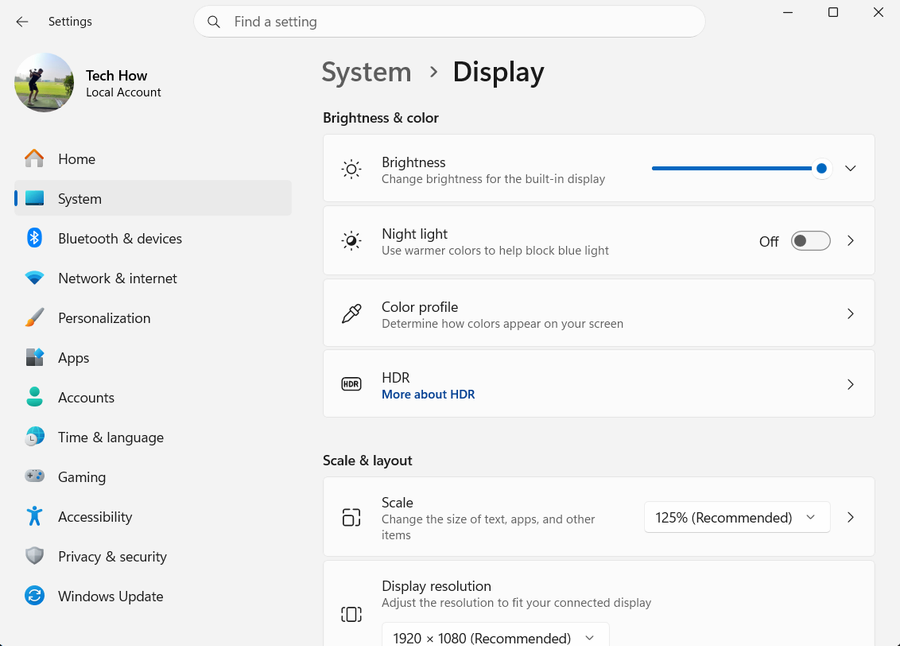
Check Display settings
For a built-in display, open Settings > System > Display and move the Brightness slider. Expand Brightness to review automatic brightness based on lighting or content; only supported hardware shows those controls.
Update the display driver
If a built-in display has no usable brightness slider, search for Device Manager, expand Display adapters, right-click the adapter, choose Update driver, and follow the prompts.
Check automatic brightness behavior
If brightness changes with room lighting or screen content, return to Display > Brightness and adjust the automatic-lighting toggle or Change brightness based on content setting. Content-adaptive changes can be normal on supported Windows 11 PCs.
Retest the exact screen
Move the applicable control from low to high once and confirm the intended display responds. For an external monitor, verify the on-screen monitor menu rather than expecting Windows to add a slider.
Video walkthrough
If it does not work
- If the slider remains absent for a built-in panel after the display-driver update, record the PC model and display-adapter name and use the PC manufacturer's support channel. Do not install a driver selected only by a third-party updater's generic match.
Sources and verification
Checked against official documentation on . Scope: Windows.
Microsoft's current display guide distinguishes built-in and external brightness controls and documents manual, ambient-light, content-adaptive, and display-driver checks.