
Windows 11 · Windows
Set or Change a Password in Windows 11
Source-checked About 10 minutes
Answer
For a signed-in local Windows account, open Settings > Accounts > Sign-in options > Password > Change, enter the current password, and create the new one. Microsoft-account and organization passwords use their own account flows.
Confirm this is a local account
Open Settings > Accounts > Your info. Continue with this procedure only for a local Windows account whose current password you know; Microsoft-account and managed work or school passwords are changed through their account owner.
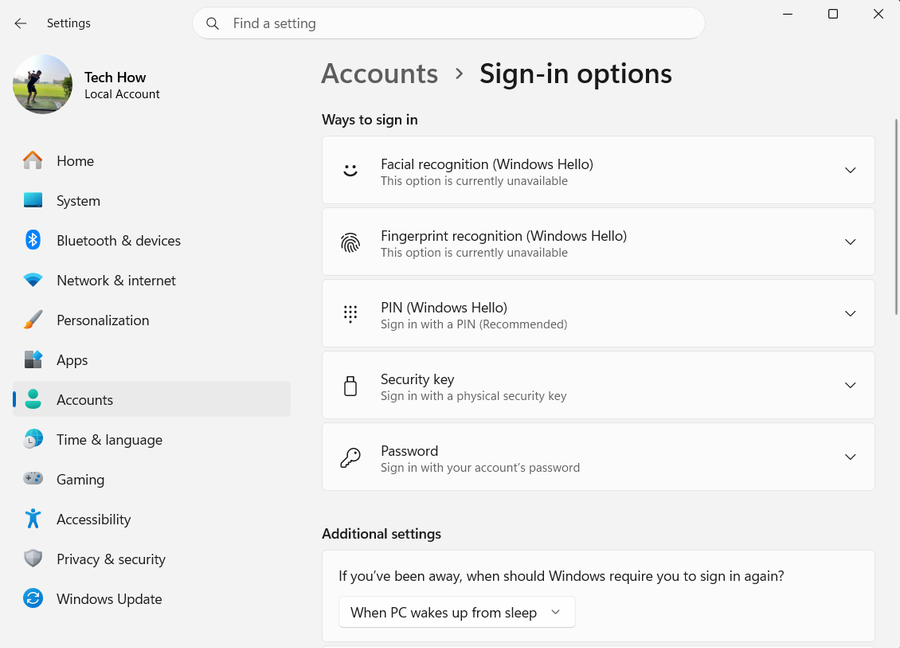
Change a local password
Open Settings > Accounts > Sign-in options. Select Password > Change, enter the old password, then follow the prompts to enter and confirm the new password and hint.
Keep recovery details private
Do not share the password, hint, security-question answers, reset disk, or verification codes. A legitimate helper does not need those secrets to point you to Microsoft's documented controls.
Understand the sign-in methods
Changing the local account password does not automatically replace a configured Windows Hello PIN, face, or fingerprint. Those device sign-in methods appear separately in Sign-in options.
Verify after locking Windows
Press Windows+L, choose Password under Sign-in options if Windows defaults to another method, and sign in once with the new password. Keep another authorized recovery route available before signing out of a critical device.
Video walkthrough
If it does not work
- If Password > Change is missing, recheck the account type and organization policy. If the local password is forgotten, use Microsoft's sign-in-screen reset procedure with the configured security questions or password-reset disk instead of following an unofficial bypass.
Sources and verification
Checked against official documentation on . Scope: Windows.
Microsoft's current local-account password article documents the signed-in Settings path and separates it from forgotten-password recovery.